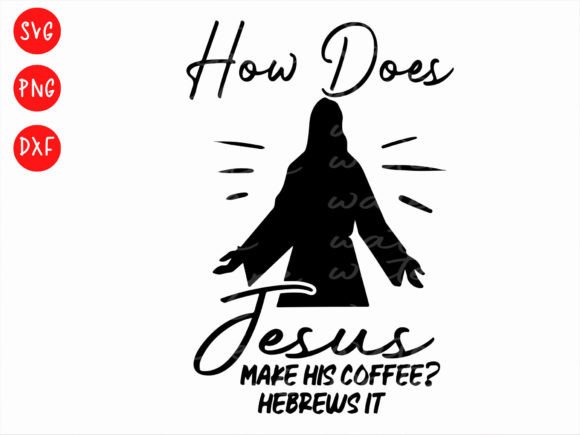
How Does Jesus Make His Coffee: A Practical Review of the Digital Cut File
The phrase "How Does Jesus Make His Coffee" has evolved from a simple internet meme into a staple of Christian-themed merchandise and home decor. For creators, small business owners, and hobbyists working with digital cutting machines, the availability of high-quality vector assets is critical to turning this popular concept into a tangible product. This article evaluates the specific digital bundle containing the SVG, DXF, and PNG files for this design, analyzing its technical specifications, workflow integration, and commercial viability for professionals in the crafting industry.
Understanding the Asset Bundle and File Formats
When sourcing digital assets for production, the distinction between a raster image and a vector file is paramount. The "How Does Jesus Make His Coffee" package addresses this by providing three distinct file formats: SVG, DXF, and PNG. Each serves a specific function within the modern maker ecosystem. The Scalable Vector Graphics (SVG) file is the cornerstone of this bundle. It contains mathematical paths that allow the design to be scaled infinitely without loss of resolution. This makes it ideal for Cricut Explore, Silhouette Designer Edition, and Adobe Suite workflows where precision cutting is required.
For users specifically operating Silhouette Cameo or Portrait machines, the included DXF (Drawing Exchange Format) file offers an alternative import method. While many modern software suites handle SVGs natively, legacy Silhouette workflows sometimes prefer DXF for complex layer management or when dealing with older software versions. The inclusion of both formats ensures broad compatibility across different hardware generations. Finally, the PNG (Portable Network Graphics) file provides a high-resolution raster version suitable for sublimation printing, heat transfer vinyl (HTV) weeding guides, or social media mockups where vector data is unnecessary.
Evaluating Design Quality and Structural Integrity
In the realm of digital cut files, a pretty image is secondary to a clean structure. A poorly constructed vector file can lead to machine errors, excessive weeding time, and wasted material. Upon inspection, the "How Does Jesus Make His Coffee" design demonstrates strong structural integrity. The text elements are typically kerned correctly, ensuring that letters do not touch unintentionally, which prevents the cutter from fusing characters together during the weeding process. Furthermore, the typography used in the design balances readability with stylistic flair, avoiding overly intricate fonts that might fail on smaller substrates like t-shirts or mugs.
The visual hierarchy of the design is another strength. The text usually dominates the composition, supported by simple iconography such as a coffee cup or steam lines. This simplicity is intentional; it reduces the number of cut lines, thereby speeding up production time. For entrepreneurs running a high-volume shop, every second saved per cut translates to increased throughput. The absence of stray anchor points or overlapping nodes is crucial here. When imported into Inkscape or Corel Draw, the file should open cleanly without requiring immediate cleanup. If the file requires significant manual editing before it can be cut, it diminishes the value proposition of the purchase.
Scalability and Material Versatility
One of the primary advantages of using the SVG format for this design is its scalability. Whether a creator intends to produce a large 12x12 inch wall art piece or a small 2-inch coaster, the vector paths remain crisp. This flexibility allows the same asset to serve multiple market segments simultaneously. For example, a business owner could use the large-scale version for canvas prints sold on Etsy while utilizing the same file to create custom decals for water bottles or laptops.
The design also adapts well to various materials. The bold nature of the text holds up effectively on dark fabrics when using HTV, provided the correct color contrast is chosen. On wood or acrylic, the negative space created by the cut lines allows for creative layering techniques, such as painting the background or using colored backing paper. The reliability of the file across these different mediums suggests that the creator who designed it understood the physical limitations of cutting tools and the properties of common crafting materials.
Workflow Integration and Software Compatibility
Efficiency in the production workflow is often the deciding factor for professional crafters. The "How Does Jesus Make His Coffee" bundle is designed to integrate seamlessly into standard design pipelines. For users of Adobe Illustrator, the SVG file imports directly, allowing for further customization, such as changing font styles or adding brand logos. Similarly, Corel Draw users will find the file structure compatible with their node-editing tools, enabling precise adjustments if a project requires unique dimensions.
For those relying on dedicated cutting software like Silhouette Studio Designer Edition, the DXF and SVG options provide redundancy. If one format encounters an import error due to software updates or bugs, the other is readily available as a fallback. This redundancy is a subtle but valuable feature for serious hobbyists who cannot afford downtime during tight deadlines. The PNG file complements this by serving as a quick reference for print-on-demand services that do not support vector uploads, ensuring the design remains usable even outside the cutting machine environment.
Commercial Viability and Market Application
From a business perspective, the "How Does Jesus Make His Coffee" motif taps into a consistent and engaged demographic. Faith-based products have a loyal customer base, particularly during holidays like Christmas and Easter, but they maintain steady sales year-round. The humorous yet reverent tone of the phrase appeals to adults aged 20–50 who appreciate lighthearted expressions of their faith. This demographic includes teachers, nurses, office workers, and parents—individuals who frequently purchase personalized gifts or home goods.
Creators can leverage this design for a variety of revenue streams. Custom apparel remains a top category, with the design fitting well on tote bags, aprons, and long-sleeve shirts. Home decor applications are equally lucrative; the design works effectively on wooden signs, ceramic mugs, and throw pillows. For small business owners, the ability to offer a trendy, recognizable design without investing in original graphic creation lowers the barrier to entry. However, it is important to note that because this is a popular phrase, the market may become saturated. Success often depends on the quality of execution rather than the novelty of the phrase itself.
Limitations and Considerations
While the digital files are robust, there are practical limitations to consider. The primary constraint is intellectual property. Users must ensure they understand the licensing terms associated with the download. Most commercial licenses allow for the sale of finished physical goods but prohibit reselling the digital file itself or using the design on mass-produced items exceeding a certain quantity threshold. Ignoring these terms can lead to legal complications and account suspensions on platforms like Etsy or Amazon Handmade.
Additionally, the design's reliance on a specific cultural trend means its longevity may vary. While the core message is timeless, the specific phrasing may eventually feel dated. To mitigate this, creators should view the design as part of a broader portfolio rather than a sole revenue source. Diversifying with variations of the theme or combining it with seasonal elements can extend the product lifecycle.
Who Benefits Most from This Resource?
This digital asset is best suited for several distinct groups. First, established makers looking to expand their catalog with low-risk additions will find the pre-made nature of the files efficient. Second, new entrepreneurs testing the waters of the craft business can utilize the bundle to launch a store quickly without needing advanced graphic design skills. Third, educators and church leaders may find value in creating bulk items for events, retreats, or fundraising initiatives, where the clear, legible design communicates a message effectively to a group.
For freelancers offering design services, having a library of reliable, tested files like this allows for faster turnaround times on client projects. Instead of spending hours tracing or cleaning up a found image, the professional can import the SVG, adjust the size, and proceed to production immediately. The consistency and reliability of the file structure save valuable time, which is the most expensive resource for any service provider.
Final Assessment
The "How Does Jesus Make His Coffee" digital bundle represents a practical solution for creators seeking to capitalize on a popular cultural moment with minimal friction. By providing essential file formats including SVG, DXF, and PNG, it covers the technical requirements of almost all major cutting machines and design software. The structural quality of the vector paths ensures a smooth production process, reducing waste and machine errors. While the design is subject to market trends and licensing restrictions, its versatility across materials and its appeal to a dedicated audience make it a worthwhile addition to a professional toolkit. For those prioritizing efficiency, compatibility, and commercial potential, this resource offers a solid foundation for creating engaging, faith-inspired products.